Understanding the Difference Between Commercial and Residential HVAC
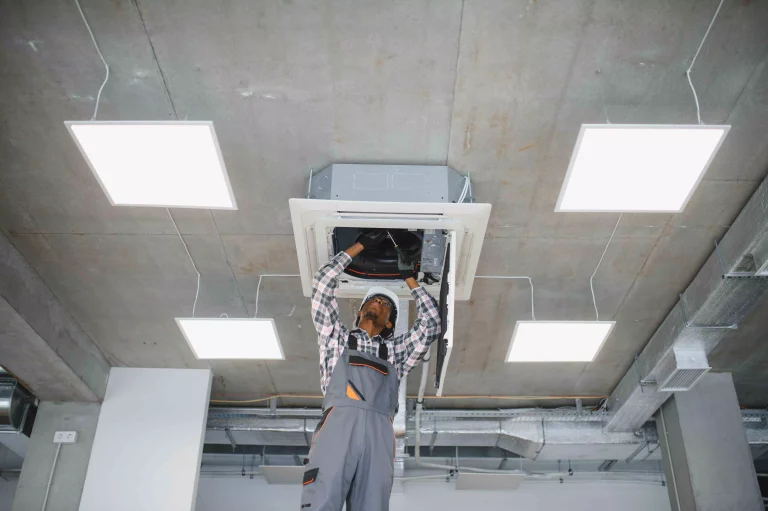
Commercial and light commercial HVAC systems differ substantially from their residential counterparts. Commercial units are designed to condition larger spaces, accommodate higher occupancy loads, and operate under more demanding conditions. Light commercial systems typically serve spaces ranging from 1,000 to 10,000 square feet, including small offices, retail shops, and restaurants. Full commercial systems handle larger buildings with complex zoning requirements, variable occupancy patterns, and specialized ventilation needs. Both categories require professional expertise that goes beyond standard residential service.
Commercial systems often utilize rooftop units, split systems, variable refrigerant flow technology, and packaged heating and cooling units. These systems demand precise load calculations that account for building orientation, insulation values, window exposure, internal heat gains from equipment and lighting, and peak occupancy numbers. At Liberty Mechanical, our technicians are trained to evaluate all of these variables and design solutions that deliver optimal performance without wasting energy or driving up operational costs.
Our Commercial Installation Process
Every commercial HVAC installation we perform begins with a thorough assessment of your building and its specific requirements. We conduct Manual J and Manual D calculations to determine the exact heating and cooling loads and ductwork specifications your space demands. Oversizing or undersizing a commercial system can lead to humidity problems, hot and cold spots, excessive energy consumption, and premature equipment failure. Our methodical approach eliminates guesswork and ensures your investment performs as intended for years to come.
Once we have completed our assessment, we work with you to select equipment that aligns with your budget, energy goals, and operational demands. We install systems from leading manufacturers like Carrier and ensure every component meets or exceeds local building codes and ASHRAE standards for ventilation and indoor air quality. Our installation teams coordinate closely with your schedule to minimize disruption to your business operations, completing work efficiently while maintaining the highest standards of craftsmanship.
Preventive Maintenance for Commercial Systems
Preventive maintenance is the single most effective strategy for extending the lifespan of commercial HVAC equipment, reducing energy costs, and avoiding costly emergency breakdowns. Studies from the Department of Energy indicate that regular maintenance can improve system efficiency by up to 15 percent and extend equipment life by several years. For business owners, this translates directly into lower utility bills and fewer unexpected capital expenditures.
Our commercial maintenance programs are tailored to the specific equipment and usage patterns of your facility. A typical maintenance visit includes the following key tasks:
- Refrigerant level checks and adjustments to ensure proper heat exchange and compressor protection
- Electrical connection inspections to identify worn contactors, loose terminals, and potential safety hazards
- Condenser and evaporator coil cleaning to maintain peak heat transfer efficiency
- Belt and bearing inspections on blower motors and fan assemblies to prevent mechanical failure
- Thermostat and control system calibration to maintain accurate temperature regulation across all zones
- Filter replacement and airflow verification to support healthy indoor air quality for occupants