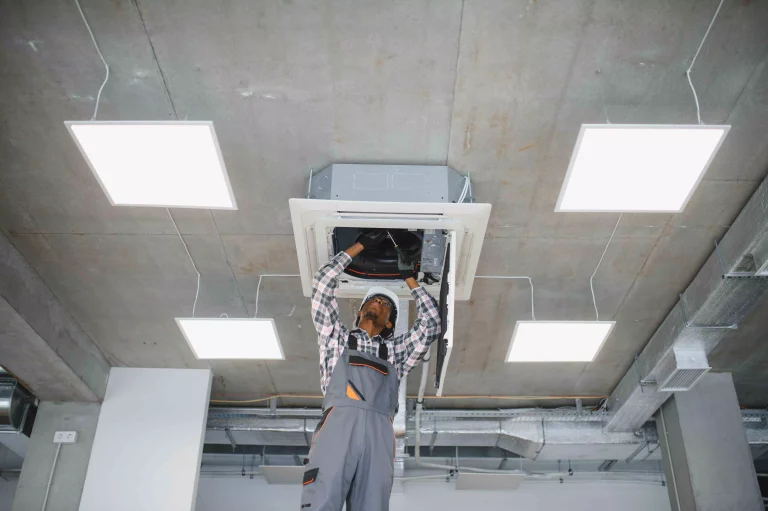
Commercial HVAC systems are significantly more complex than their residential counterparts. They serve larger spaces, handle greater occupancy loads, and often incorporate specialized zoning configurations. Because of this complexity, routine professional maintenance is not optional — it is essential. According to the U.S. Department of Energy, HVAC systems account for roughly 40 percent of the total energy consumed in commercial buildings. Without proper upkeep, that number can climb even higher as components degrade, airflow becomes restricted, and refrigerant levels fall out of specification.
Our Comprehensive Maintenance Process
When we perform commercial HVAC maintenance, we follow a thorough, systematic methodology designed to catch problems before they escalate into costly repairs or full system failures. Our technicians arrive with decades of combined hands-on experience and the latest diagnostic tools, allowing us to assess every component with precision. We don’t believe in surface-level inspections. Instead, we conduct deep evaluations that examine electrical connections, mechanical wear, refrigerant charge, airflow dynamics, and control system calibration.
Our standard commercial maintenance inspection covers a detailed checklist of critical tasks:
- Inspect and replace air filters to ensure optimal airflow and indoor air quality across all zones
- Clean evaporator and condenser coils to maintain efficient heat exchange and prevent energy waste
- Test thermostat and building automation controls for accuracy and proper calibration
- Check refrigerant levels and inspect for leaks to protect system efficiency and comply with EPA regulations
- Lubricate all moving parts including fan motors, bearings, and belt drives to reduce friction and wear
- Inspect ductwork for leaks, blockages, and insulation deterioration that compromise system performance
- Evaluate electrical components including contactors, capacitors, and wiring connections for signs of damage or corrosion
- Test safety controls and emergency shutoffs to ensure full compliance with local building codes
Each of these steps plays a vital role in extending equipment lifespan, reducing energy consumption, and preventing unplanned downtime. After every service visit, we provide a detailed report of our findings along with prioritized recommendations so you can make informed decisions about your building’s mechanical systems.
Real-World Applications Across Industries
Commercial HVAC maintenance looks different depending on the type of facility. Restaurants and commercial kitchens require frequent filter changes and exhaust system inspections due to grease and particulate buildup. Office buildings need balanced airflow across multiple floors to maintain consistent comfort and productivity. Retail environments demand reliable climate control to protect inventory and create a welcoming shopping experience. Medical and dental offices must meet strict indoor air quality standards to protect patients and staff. Our team is trained to deliver tailored solutions for each of these environments, adapting our maintenance protocols to the specific demands of the space.
Warehouses and light industrial facilities present another unique challenge. These buildings often feature rooftop units exposed to harsh weather conditions, which accelerates component degradation. Regular seasonal maintenance on these units prevents premature compressor failure and keeps energy costs manageable even in extreme Texas heat.
The Value of Preventive Maintenance Programs
Investing in a preventive maintenance program delivers measurable returns. Industry data from ASHRAE suggests that well-maintained commercial HVAC systems operate up to 25 percent more efficiently than neglected ones. That efficiency translates directly into lower utility bills month after month. Beyond cost savings, preventive maintenance reduces the likelihood of emergency breakdowns by as much as 95 percent, according to some facility management studies. Equipment that receives regular professional attention also lasts significantly longer, often exceeding its expected service life by several years.
At Liberty Mechanical, we work with each commercial client to develop a maintenance schedule that aligns with the specific needs of their equipment, building usage patterns, and budget considerations. Whether you operate a single storefront in Lakeway, The Hills, Bee Cave, Hudson Bend, Briarcliff, & Lost Creek, TX or manage a portfolio of commercial properties, we design a plan that keeps your systems reliable and efficient throughout every season. When you partner with a locally-owned company that has spent over three decades building trust in this community, you get more than maintenance — you get a lasting commitment to your comfort and success.